
Alle Artikel
vCluster löst das Compliance-Dilemma der Mandantenfähigkeit
Bei der Mandantentrennung sind ISO 27001, SOC 2 und PCI-DSS unnachgiebig – vCluster nimmt Ihnen die erzwungene Wahl zwischen dediziertem Cluster und bloßem Namespace ab.
·
Jannis Schoormann

Hinweis: Dieser Beitrag wurde aus dem Englischen übersetzt. Fachbegriffe, Code und Befehle wurden bewusst im Original belassen.
Die verborgenen Kosten von Compliance in Kubernetes
Die Verbreitung von Kubernetes in Unternehmen nimmt Fahrt auf. Unterliegt Ihre Organisation jedoch strengen regulatorischen Anforderungen wie ISO 27001, SOC 2, PCI-DSS und HIPAA, kann dieses Tempo echte Herausforderungen schaffen. Wie geben Sie Entwicklungsteams die nötige Autonomie, ohne Ihren Compliance-Status zu gefährden?
Für viele Organisationen wird dieser Zielkonflikt bei der Mandantenfähigkeit konkret. Sie müssen Infrastruktur effizient teilen, doch Compliance-Rahmenwerke verlangen Isolation, Zugriffskontrolle und Auditierbarkeit. Die gewählte Architektur entscheidet darüber, ob Sie beides erreichen oder das eine dem anderen opfern.
Die Compliance-Herausforderung in Kubernetes
Die konkreten Rahmenwerke unterscheiden sich, doch die grundlegenden Erwartungen an geteilte Infrastruktur sind einheitlich:
ISO 27001 verlangt strenge Zugriffskontrollen und die Trennung von Umgebungen.
SOC 2 fordert eine logische Trennung mit klar definierten Zugriffsgrenzen.
PCI-DSS verlangt Netzwerksegmentierung und die Isolation von Systemen, die mit Karteninhaberdaten in Berührung kommen.
HIPAA fordert Schutzmaßnahmen, die sensible Gesundheitsdaten isoliert und zugriffskontrolliert halten.
Unterschiedliche Rahmenwerke, dieselben grundlegenden Anforderungen: Isolation, Zugriffskontrolle und Auditierbarkeit. Die Frage ist, welchen Isolationsgrad Ihr konkreter Compliance-Kontext verlangt – und welche Kubernetes-Architektur ihn liefern kann.
Die etablierten Ansätze
Es lohnt sich, die Möglichkeiten und Grenzen bestehender Multi-Tenancy-Modelle klar zu benennen.
Namespace-as-a-Service (NaaS)
Im NaaS-Modell teilen sich Teams einen Cluster und erhalten jeweils eigene Namespaces. Die Isolation wird über RBAC (Role-Based Access Control), Network Policies, Resource Quotas und Policy Engines wie Kyverno durchgesetzt. Damit lässt sich eine beträchtliche Zahl an Multi-Tenancy-Anwendungsfällen abdecken, darunter viele regulierte Umgebungen. Bei korrekter Konfiguration bietet NaaS belastbare Zugriffskontrolle und Netzwerksegmentierung. Dedizierte Node Pools mit Taints/Tolerations können sogar eine Isolation auf Compute-Ebene ermöglichen.
An seine Grenzen stößt NaaS bei der Control Plane. Alle Mandanten teilen sich einen einzigen API-Server und einen gemeinsamen Satz cluster-weiter Ressourcen: CRDs, ClusterRoles und Admission Webhooks. RBAC entschärft das zwar, wirkt aber innerhalb der gemeinsamen Control Plane und bleibt anfällig für Fehlkonfigurationen. Audit-Logs werden von allen Mandanten geteilt und müssen gefiltert und korreliert werden. Das erschwert die Einhaltung von Vorgaben in Szenarien, die eine Trennung auf Umgebungsebene verlangen und nicht nur Zugriffskontrollen innerhalb einer gemeinsamen Umgebung.

Cluster-as-a-Service (CaaS)
Am anderen Ende des Spektrums erhält jeder Mandant einen vollständig dedizierten Cluster. Aus Compliance-Sicht ist das das einfachste Modell: Jede Grenze ist hart. Dafür sind die betrieblichen Abstriche erheblich. Die Infrastrukturkosten steigen mit der Zahl der Mandanten. Jeder Cluster benötigt eigenes Lifecycle-Management – Upgrades, Patching, Monitoring und Policy-Durchsetzung. Fleet-Management-Werkzeuge können helfen, doch der Aufwand ist real und wächst mit jedem zusätzlichen Cluster.

Die Lücke
Beide Modelle sind tragfähig, und für viele Organisationen ist eines davon die richtige Antwort. Es gibt jedoch Compliance-Szenarien, in denen keines ideal ist: Sie brauchen eine stärkere Isolation als NaaS bietet, insbesondere auf Ebene der Control Plane. Zugleich sind dedizierte Cluster je Mandant betrieblich unpraktikabel oder schlicht zu teuer. Genau diese Lücke schließt vCluster.
Wie vCluster die Lücke schließt
vCluster ist eine Open-Source-Technologie, die vollwertige virtuelle Kubernetes-Cluster innerhalb eines Host-Clusters bereitstellt. Jeder virtuelle Cluster erhält einen eigenen API-Server, eine eigene Control Plane und einen eigenen Satz cluster-weiter Ressourcen. Aus Sicht des Mandanten ist die Umgebung von einem dedizierten Cluster nicht zu unterscheiden. Auf Infrastrukturebene werden die Workloads auf gemeinsam genutzten Host-Nodes geplant.
Diese Architektur adressiert unmittelbar die Control-Plane-Grenze von NaaS und vermeidet zugleich den betrieblichen Ballast von CaaS. Statt pauschaler Aussagen sehen wir uns jedoch genau an, wie sie auf die Anforderungen der Compliance-Rahmenwerke einzahlt.
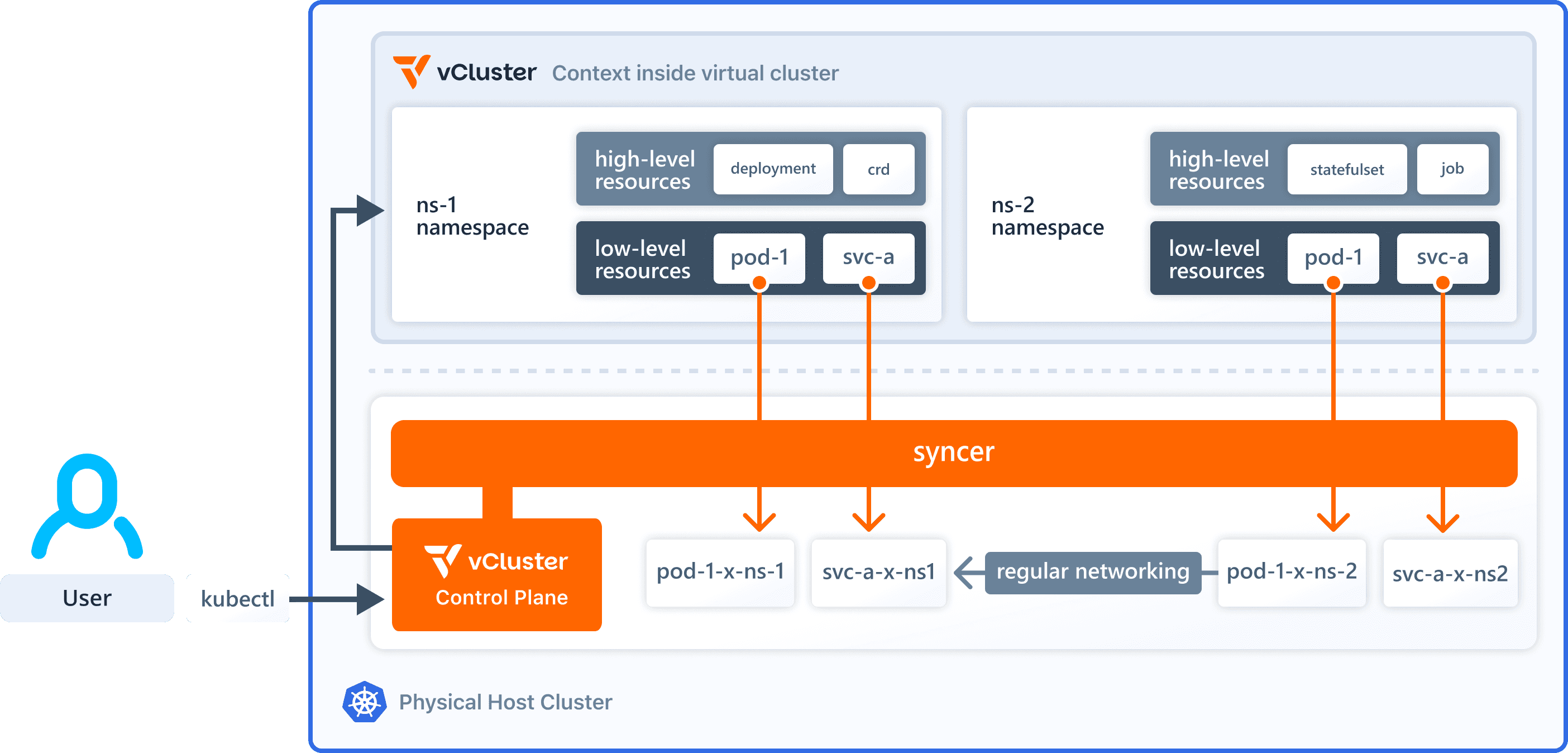
Wie vCluster auf Compliance-Anforderungen einzahlt
Was vCluster für regulierte Umgebungen überzeugend macht, ist nicht die Technologie an sich, sondern wie unmittelbar die Architektur auf das einzahlt, was Compliance-Rahmenwerke tatsächlich verlangen.
Isolation und Trennung
Jeder virtuelle Cluster verfügt über einen eigenen API-Server und eine eigene Control Plane. Mandantenübergreifender API-Zugriff ist nicht möglich. Mandanten können die cluster-weiten Ressourcen anderer weder einsehen noch verändern oder stören. Das adressiert unmittelbar die Trennungsanforderungen der ISO 27001 ebenso wie die von SOC 2 geforderte logische Separierung – und zwar auf einem Niveau, das sich allein mit Namespace-Grenzen nur schwer erreichen lässt.
Zugriffskontrolle
Jeder virtuelle Cluster hat sein eigenes RBAC. Roles, Bindings und Service Accounts sind vollständig auf den virtuellen Cluster begrenzt, sodass keine Rechte über Mandantengrenzen hinweg durchsickern. Auch NaaS bietet über namespace-bezogene Rollen RBAC auf Mandantenebene. Im vCluster-Modell ist die Isolation jedoch strukturell statt konfigurativ: Es gibt keine gemeinsame Control Plane, in der eine fehlkonfigurierte ClusterRole versehentlich mandantenübergreifenden Zugriff gewähren könnte.
Auditierbarkeit
Da jeder virtuelle Cluster einen eigenen API-Server besitzt, sind die Audit-Logs standardmäßig nach Mandanten getrennt. So lässt sich Prüfern leicht nachweisen, wer wann in welcher Umgebung auf welche Ressourcen zugegriffen hat – ohne das Filtern und Korrelieren, das ein gemeinsamer API-Server erfordern würde.
Netzwerksegmentierung
In Kombination mit Network Policies, die auf Ebene des Host-Clusters durchgesetzt werden, unterstützt vCluster die von PCI-DSS geforderte Netzwerksegmentierung. Der Verkehr zwischen virtuellen Clustern lässt sich standardmäßig einschränken, sodass Workloads auf Netzwerkebene isoliert bleiben. Anzumerken ist, dass Network Policies im NaaS-Modell Ähnliches leisten. vCluster verändert die Geschichte der Netzwerkisolation nicht grundlegend, sondern setzt sie auf eine stärkere Trennung der Control Plane auf.
Compute-Isolation
Manche Compliance-Szenarien verlangen eine Trennung auf Compute-Ebene, sodass die Workloads eines Mandanten niemals dieselben zugrundeliegenden Nodes nutzen wie die anderer Mandanten. vCluster unterstützt das, indem es virtuelle Cluster auf dedizierte Node Pools abbildet – die sogenannten Private Nodes.
Wichtig: Compute-Isolation ist kein Alleinstellungsmerkmal von vCluster. Dedizierte Node Pools mit Taints und Tolerations oder dynamische Provisioner wie Karpenter erreichen dasselbe in einem NaaS-Setup. Der Unterschied besteht darin, dass vCluster Compute-Isolation und Control-Plane-Trennung in einem einzigen Modell vereint – entscheidend, wenn Ihre Compliance-Anforderungen beides verlangen.
Wo vCluster im Gesamtbild steht
Ein direkter Vergleich der drei Ansätze schafft Klarheit:
Anforderung | NaaS | vCluster | CaaS |
Zugriffskontrolle | RBAC je Namespace | Eigenständiges RBAC je virtuellem Cluster | Vollständig eigenständig je Cluster |
Trennung der Umgebungen | Logisch (gemeinsame Control Plane) | Trennung auf Control-Plane-Ebene | Vollständige Trennung der Infrastruktur |
Audit-Trails | Gemeinsame API-Server-Logs (Filtern erforderlich) | Getrennte API-Server-Logs je Mandant | Vollständig eigenständige Logs |
Netzwerksegmentierung | Network Policies | Network Policies + Durchsetzung auf Host-Ebene | Grenzen auf Cluster-Ebene |
Compute-Isolation | Dedizierte Node Pools | Dedizierte Node Pools (Private Nodes) | Inhärent |
Betrieblicher Aufwand | Gering | Mittel | Hoch |
Infrastrukturkosten | Gering | Gering | Hoch |
vCluster ersetzt die anderen Modelle nicht. Es schließt eine konkrete und wichtige Lücke: Compliance-Szenarien, die eine Isolation auf Control-Plane-Ebene verlangen, ohne den betrieblichen Aufwand vollständig dedizierter Cluster.
Was das für Sie bedeutet
In Kubernetes muss Compliance weder langsame Entwicklungszyklen noch steigende Infrastrukturkosten oder Isolationsmodelle bedeuten, die einer Prüfung nicht standhalten. Sie erfordert allerdings, das für Ihren regulatorischen Kontext passende Isolationsmodell zu wählen.
Wenn Ihre Compliance-Anforderungen eine Trennung auf Umgebungsebene, getrennte Control Planes, eigenständige Audit-Trails und strukturelle Isolationsgrenzen verlangen – und Sie all das effizient über mehrere Mandanten hinweg bereitstellen müssen –, ist vCluster eine Überlegung wert.
Sprechen Sie uns an, um zu besprechen, wie wir Ihre Compliance-Herausforderungen in mandantenfähigen Kubernetes-Umgebungen lösen können.
Und wenn Sie den technischen Deep Dive dazu sehen möchten, wie vCluster die Isolation in der Praxis löst, lesen Sie unseren weiteren Blogbeitrag: Solving Kubernetes Multi-Tenancy Challenges with vCluster.
Teilen